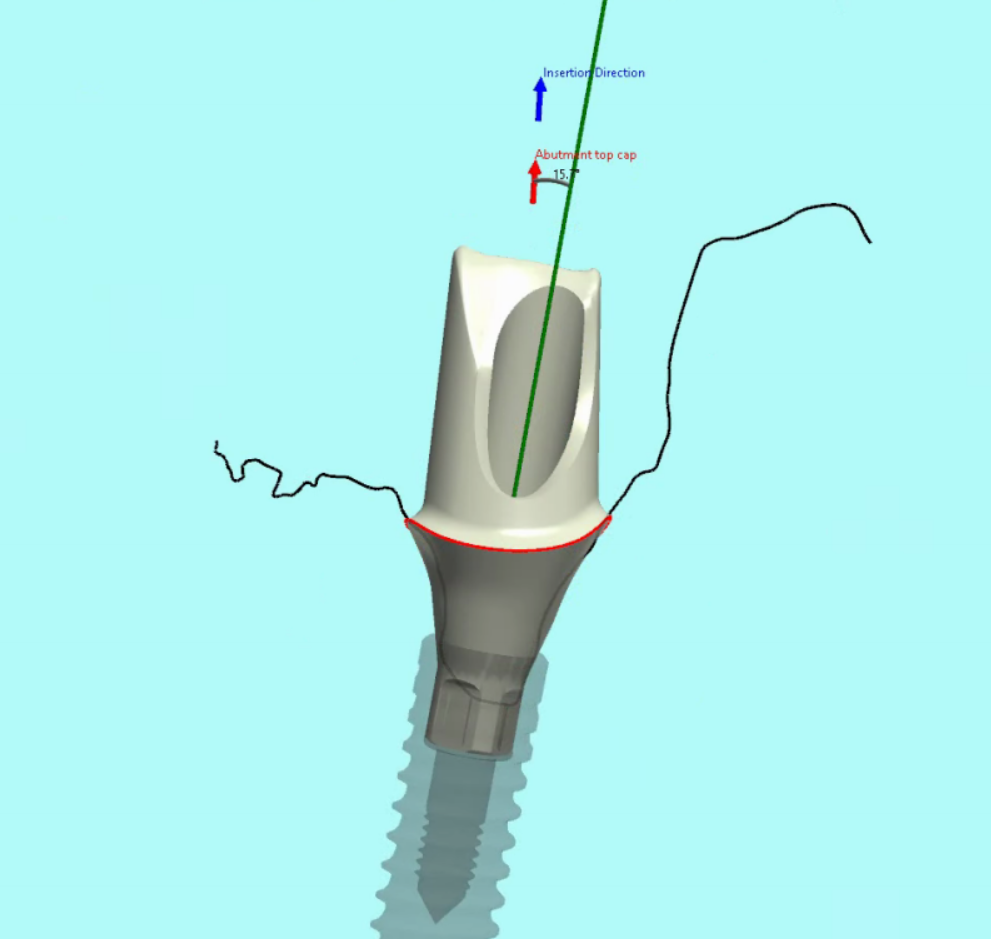


Retrofitting an existing removable appliance does not have to mean starting from scratch. With the right scan strategy, we can either preserve what already works or intentionally change what does not while still keeping the appliance in service. The key is capturing the correct reference data up front.
When the Existing Abutment Works Well
If you are happy with the current abutment tooth and the appliance already fits and functions well, the goal is simple: copy what is already proven.
For cases like this, whether it is an RPD, Nesbit, nightguard, or similar appliance, a pre scan of the abutment tooth without the appliance in place is plenty. This allows us to digitally duplicate the tooth’s function exactly as it exists today.
This approach works best when:
-
Rest seats are intact and properly positioned
-
Guide planes are functional
-
Undercuts and contours are correct
-
Both you and the patient are satisfied with the current fit and feel
By copying the existing abutment geometry, we can ensure the new restoration supports the appliance exactly as intended, minimizing adjustments and chair time.
When the Abutment Needs to Change but the Appliance Does Not
In some cases, the existing appliance is worth preserving, but the abutment tooth is not. Attrition, trauma, or compromised contours may require a new crown, while the patient still relies on their current RPD or removable appliance.
To accurately retrofit the existing appliance to a new preparation, we rely on three separate scans, each serving a distinct and necessary purpose.
-
Appliance scan, extra oral and not inserted

This scan is used to capture the complete geometry of the appliance. A full 360 scan is required, including both the internal intaglio surfaces and the external contours of the appliance. Modern intraoral scanners often struggle to accurately record the intaglio surface while the appliance is seated, particularly rest seats, clasp interiors, and highly polished or metal areas. Scanning the appliance outside the mouth allows us to fully capture these critical surfaces and provides the external geometry needed to properly align this scan with the others. Scanning spray or powder is frequently required to improve data capture on reflective surfaces. -
Appliance scan, intra oral and inserted
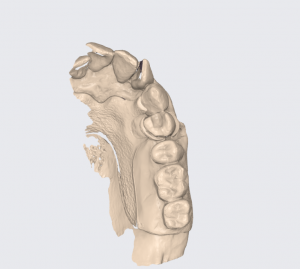
This scan acts as the alignment reference. While it is not relied upon for fine internal detail, it shows the appliance in its functional position relative to the remaining dentition and soft tissue. This scan allows us to align the appliance-only scan with the prepared abutment scan so all data shares the correct spatial relationship. -
Prepared abutment scan without the appliance
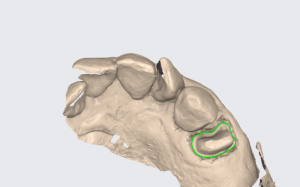
This scan allows us to design a crown that fits the patient’s mouth accurately and predictably. Scanning a prepared tooth with the appliance in place often results in compromised margin capture or distortion. By scanning the preparation on its own, we can ensure clean margins, proper emergence, and ideal fit while still designing the crown to accept the existing appliance.
When all three scans are provided, we can digitally align them in the lab to design a restoration that fits the patient precisely and allows the existing appliance to seat as intended.

Why This Matters
Providing complete and intentional scan data gives the lab the flexibility to:
-
Preserve appliance fit when it is already successful
-
Adapt an existing appliance to a new clinical reality
-
Reduce guesswork, remakes, and unnecessary adjustments
In short, the better the scans, the better the retrofit and the smoother the experience for both you and your patient.