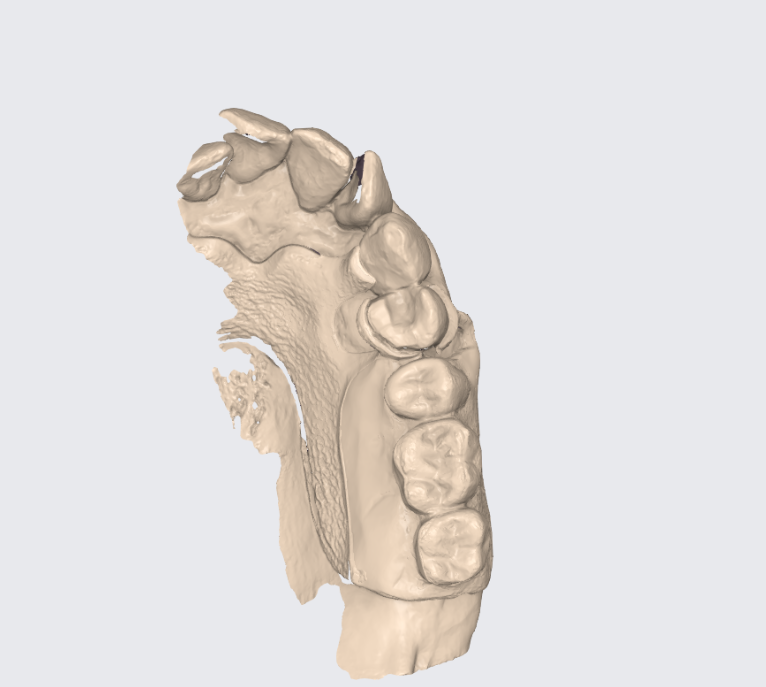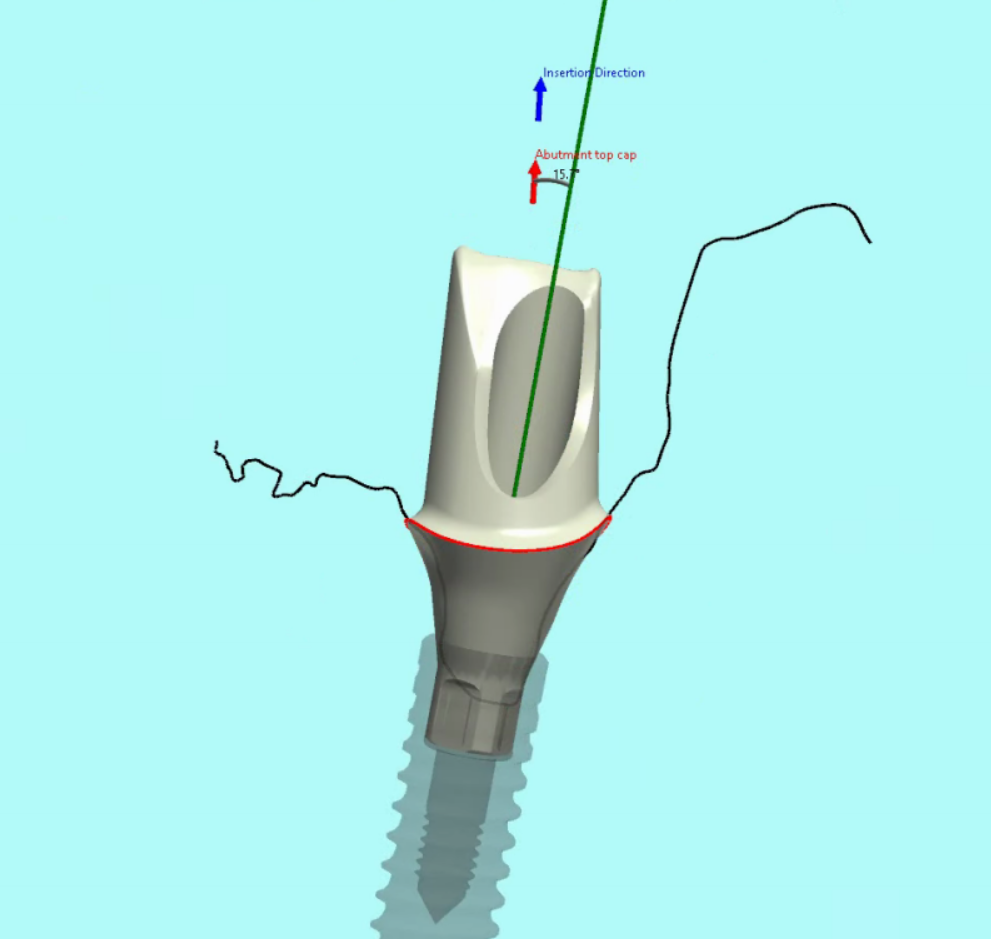


For the past few years, photogrammetry has been viewed as one of the most accurate ways to capture implant positions for full-arch cases. These systems can record implant locations with incredible precision, making them very useful for All-on-X temporaries and final restorations.
The challenge is the investment. In addition to the photogrammetry camera, the workflow still requires an intraoral scanner. For practices doing full-arch implant cases every day, that investment may make sense. For many others, especially those doing these cases less frequently, it can be harder to justify.
Where Grammetry Fits In
Grammetry offers a more practical alternative. Instead of requiring a separate photogrammetry camera, this approach uses an intraoral scanner to capture the information needed for full-arch implant restorations.
The goal is not to say photogrammetry is unnecessary. It is still an excellent technology and has an important place in full-arch dentistry. Grammetry simply gives clinicians another option, especially when they want a more accessible digital workflow using equipment they may already have.
Why Not Just Use Regular Scan Bodies?
This is an important question. Standard scan-body workflows can work very well for single implants, short-span implant bridges, and many partially edentulous situations. Full-arch implant cases are different.
In a full-arch case, the scanner has to connect multiple scan bodies across a long span, often with very little natural tooth structure or stable anatomy to help it stay oriented. As the scan moves across the arch, small stitching errors can build on each other. By the time the scan reaches the other side, the digital implant positions may not be as accurate as they appear on the screen.
That is where Grammetry becomes useful. These systems are designed to give the scanner more connected reference points across the arch. Instead of relying on separate scan bodies standing alone, the components are linked and positioned in a way that helps the scanner maintain a more stable relationship from one implant to the next.
In simple terms, Grammetry gives the intraoral scanner a better roadmap.
Why This Matters Clinically
For the doctor, the main benefit is confidence. Full-arch implant restorations leave very little room for error. If the implant positions are not captured accurately, the final restoration may not seat passively, may require extra adjustment, or may need to be remade.
For the practice, the benefit is practicality. Grammetry can allow a doctor to use a scanner they already own rather than investing in a separate photogrammetry system. That can make digital full-arch workflows more approachable, especially for offices that do these cases regularly but not every day.
For the lab, the benefit is better information. When we receive accurate scan data, the temporary, tissue, multi-unit abutments, scan flags, and bite relationship can all be brought together more predictably. This gives us a stronger starting point for designing both temporaries and finals.
Surgical Use
If this workflow is used during surgery, fiducial markers need to be placed before the extractions and maintained throughout the procedure. This allows the lab to accurately merge the scans, since the anatomy of the mouth changes once the teeth are removed.
Typical Restorative Workflow
The general workflow is fairly straightforward:
- Scan the upper arch, lower arch, and bite.
- Remove the temporary prosthesis and scan it outside the mouth.
- Scan the tissue and multi-unit abutments.
- Place the scan flags on the multi-unit abutments and complete the scan.
- Splint the components together if the system requires it.
In practice, the workflow can feel a little clunky because most intraoral scanners do not yet have a dedicated guided workflow for this process. Typically, the first scan captures the upper, lower, and bite relationship. A second scan then captures the temporary, tissue, MUAs, and scan flags. From there, the lab can merge the scans and gather the information needed to design the restoration.
There are several systems available that use this general concept. They all attach to the multi-unit abutments, but each has its own requirements.
Current Grammetry Systems
Opti-Splint
Opti-Splint requires the components to be splinted together before scanning. The splinted components are then sent to the lab as part of the workflow.
DirectScan
DirectScan has the advantage of being autoclavable, which makes it easier to sterilize and reuse in the practice.
Truss
Truss can also be autoclaved when it is not splinted. The manufacturer recommends splinting the components together during the workflow. Some clinicians also choose to pour a model and place analogs as a backup, although that may not always be necessary.
Final Thoughts
Photogrammetry is still an excellent option for full-arch dentistry, especially in practices doing a high volume of All-on-X cases. But it is not the only path to a predictable digital workflow.
Grammetry gives clinicians a practical alternative that sits between a standard scan-body workflow and a dedicated photogrammetry system. It helps address some of the challenges of scanning a full arch with an intraoral scanner, while keeping the workflow more accessible for practices that may not be ready to invest in photogrammetry.
That is why this workflow is worth paying attention to. It can help make full-arch implant treatment more digital, more practical, and more predictable without requiring every practice to purchase another major piece of equipment.
The best workflow is still the one that fits the practice, the case, and the team using it. For many offices, Grammetry may be a very reasonable place to start.
Shay Marino, RDH
June 2, 2026
Email the author
smarino@concorddentallab.com