

Why Bite Rims Still Matter in a Digital World
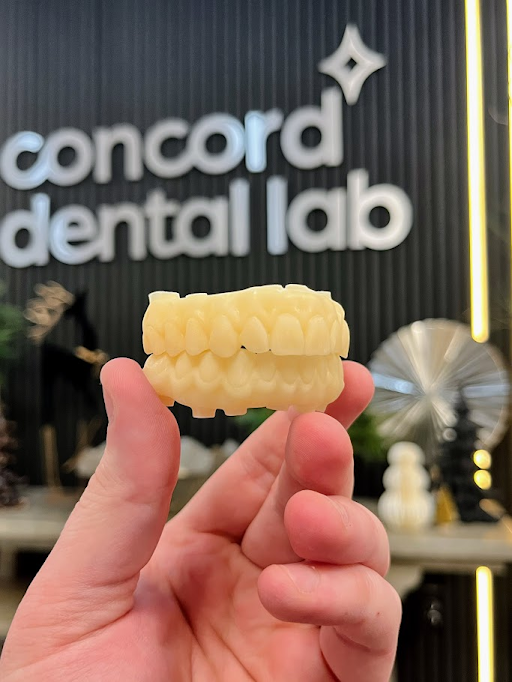
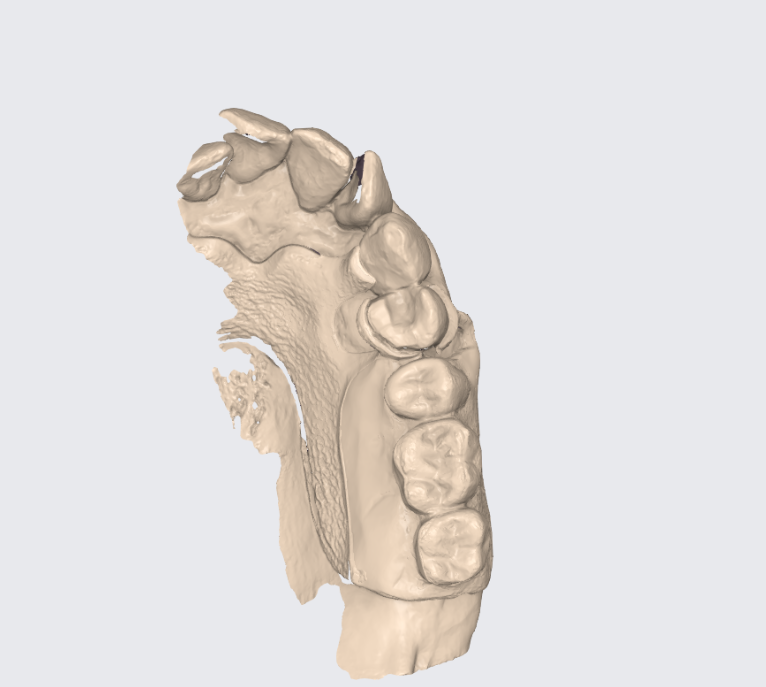
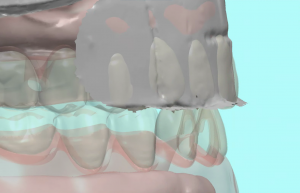
In the digital denture workflow, bite rims remain a critical analog step; one that sets the tone for the entire prosthetic outcome. Whether you’re working with a full upper and lower case (F/F) or just one arch (F/), the quality of the bite rim and its registration directly influence fit, function, and esthetics.
Think of the bite rim as setting the teeth without placing each one individually. If your rim is correct, your setup is already halfway there.
Even with intraoral scanners and CAD/CAM tools, certain fundamentals haven’t changed. A well-made bite rim is still crucial to record:
-
Vertical dimension of occlusion (VDO)
-
Centric relation
-
Midline, smile line, and canine lines
-
Lip support
-
Incisal edge position
These parameters are foundational. Without a properly contoured and adjusted rim, even the best digital tools have limited impact.
Reading and Using Setup Lines
A well-prepared bite rim includes key visual references:
-
Midline – Ensures central incisor symmetry
-
Canine lines – Guide arch form and cusp positioning
-
High smile line – Predicts gingival display
These markings aren’t just for show—they’re essential communication tools. They tell the lab how to digitally position and orient teeth, streamlining CAD setup and reducing the need for guesswork or revisions.
Setting the Occlusal Plane
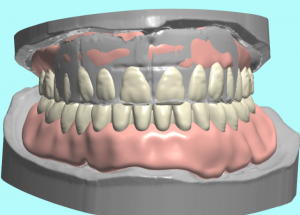
The occlusal plane established by the bite rim determines the cant and orientation of the final prosthesis. If it’s off (tilted or uneven) it can affect:
-
Esthetics (a slanted smile)
-
Phonetics
This is especially crucial in F/F cases where no natural teeth remain to guide positioning. Using anatomical landmarks like the interpupillary line and ala-tragus line, the bite rim becomes a blueprint for a balanced, functional prosthesis.
Contouring the Labial Segment
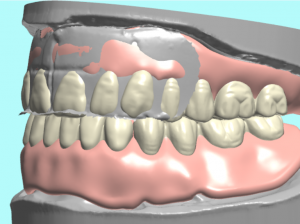
A commonly overlooked step is trimming back the labial/facial portion of the rim. Leaving it too bulky can:
-
Mislead the patient and doctor about the prosthesis’s final bulk
-
Distort expectations for lip support and comfort
By cutting it back to simulate actual tooth and flange contours, you improve accuracy in:
-
Esthetic preview
-
Lip support evaluation
-
Patient comfort during try-in
This step is especially important in esthetically demanding cases where patient acceptance hinges on natural appearance and feel.
In Summary
The bite rim is more than a bite registration: it’s a diagnostic and it’s a design tool that anchors the entire prosthetic process. In a digital world, it’s tempting to skip analog steps but precision here pays off.
If the bite rim is done right, the digital setup becomes faster, more accurate, and far less likely to require remakes. Nail the rim, and you’re halfway to a successful case.